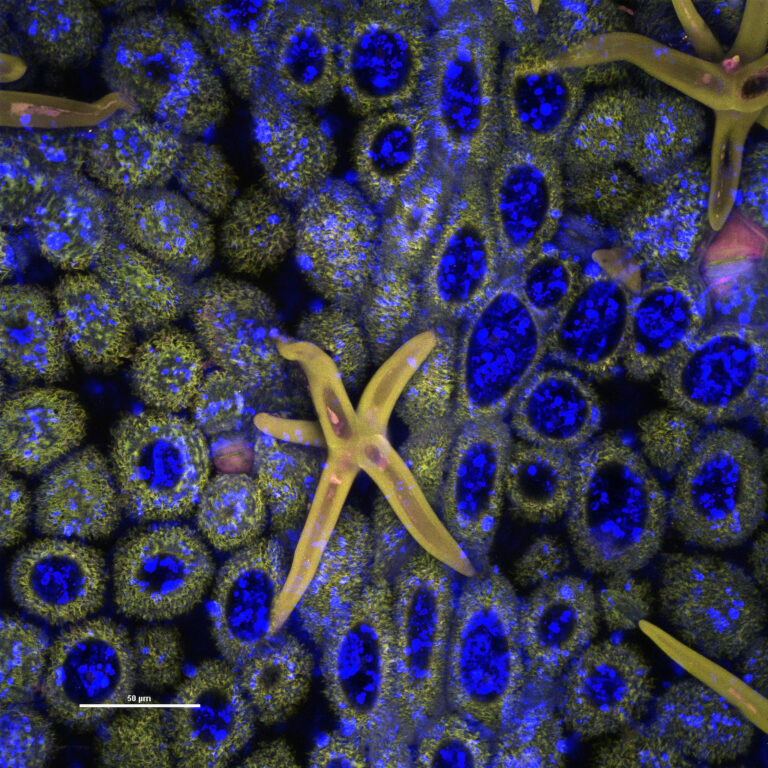
Latua pubiflora
Olivos Herreros chama de Latúe, talvez a mais rara de todas as plantas psicoativas, “o alucinógeno clássico da etnologia mapuche”. Um pesquisador traduziu o nome da planta como “Terra dos Mortos”, talvez em referência à região isolada na costa montanhosa do sul do Chile (de Valdivia a Chiloé), que é seu único habitat e que se diz ser o lugar onde os mortos partem para o oeste com o sol poente para a próxima vida. É possível observar essa planta espinhosa, que está na família Solanaceae, no Parque Oncol, perto de Valdivia, na estrada entre La Unión e Hueicolla, e na Cordilheira Pelada, perto de Osorno. Segundo Rätsch, “para os xamãs mapuches, o latúe é o incenso mais importante para dissipar espíritos maus, mau-humores, preocupações e mágoas”. Ele diz também que o Huilliche “ainda reverencia a planta como uma árvore xamânica, pois ela traz poder, conhecimento e realização; oferece proteção mágica; e pode curar”. Latúe também pode “causar delírios severos, e alucinações visuais”, cujos efeitos depois podem persistir por semanas. Pesquisas científicas estabeleceram que os principais alcalóides de L. pubiflora responsáveis por seus efeitos sedativos e alucinógenos são a atropina e a escopalomina. De acordo com Sánchez-Montoya et al, “L. pubiflora é realmente usada por curandeiros mapuches para induzir sedação, para alcançar um estado de transe ou experiência mística e também como piscicida”. Para o sacerdote capuchinho e o missionário Wilhelm de Mösbach, o latúe é uma “árvore pequena e sinistra” e uma das “plantas mais tóxicas” do Chile que “quebra a resistência às intenções retorcidas”. A planta é usada na medicina tradicional para aliviar cãibras e reumatismo.
Latua pubiflora
Olivos Herreros calls Latúe, perhaps the rarest of all psychoactive plants, “the classic hallucinogen of Mapuche ethnology.” One researcher translated the name of the plant as “Land of the Dead”, perhaps in reference to the isolated region on the mountainous coast of southern Chile (from Valdivia to Chiloé), which is its sole habitat and which is said to be the place where the dead depart westward with the setting sun for the next life. It is possible to observe this thorny plant, which is in the Solanaceae family, in the Parque Oncol near Valdivia, on the road between La Unión and Hueicolla, and in the Cordillera Pelada near Osorno. According to Rätsch, “for Mapuche shamans, latúe is the most important incense for dispelling evil spirits, bad moods, worries and grief.” He also says that the Huilliche “still revere the plant as a shamanic tree, for it brings power, knowledge, and realization; offers magical protection; and can heal.” Latúe can also “cause severe delirium, and visual hallucinations” whose after effects can persist for weeks. Scientific research has established that L. pubiflora’s main alkaloids responsible for its sedative and hallucinatory effects are atropine and scopalomine. According to Sánchez-Montoya et al, “L. pubiflora is indeed used by Mapuche medicine men to induce sedation, to reach a trance state or mystical experience and also as piscicide.” For Capuchin priest and missionary Wilhelm de Mösbach, latúe is a “sinister little tree” and one of Chile’s “most toxic plants” that “breaks down one’s resistance to twisted intentions.” The plant is used in traditional medicine to alleviate cramps and rheumatism.