Paullinia cupana
|

Paullinia cupana

Paullinia cupana This plant, whose common name is Guaraná, is held sacred by the Sateré Maué tribe in the Brazilian Amazon and has been cultivated by them for hundreds of years. Containing more caffeine than any plant in the world (2-5 times as much as coffee), Guaraná was traditionally their revered source for boosting energy…

Ayahuasca/Yagé—Banisteriopsis spp., Psychotria spp., and Diplopterys spp. (see also Yagé Complex below)
|

Ayahuasca/Yagé—Banisteriopsis spp., Psychotria spp., and Diplopterys spp. (see also Yagé Complex below)

Psychotria varieties Ayahuasca/Yagé—Banisteriopsis spp., Psychotria spp., and Diplopterys spp. For the sake of clarity, we have decided to create a special grouping of sacred plants for Microcosms. Banisteriopsis spp., Diplopterys spp. and Psychotria spp. are the plants most widely used to create the sacred drink known either as ayahuasca or yagé, depending on the brew’s…

Dianthera pectoralis
|

Dianthera pectoralis

Dianthera pectoralis The Yanomami use the shade-dried leaves of Justicia pectoralis var. Stenophylla as an additive to psychoactive Virola snuffs. The microcosmic world revealed by this unassuming plant that grows throughout the Caribbean and Central and South America with a wide variety of common names is shockingly complex and beautiful. It has a plethora of medicinal uses…

Virola theiodora
|

Virola theiodora

Virola theiodora Indigenous healer and spokesperson Davi Kopenawa collaborated for decades with French anthropologist Bruce Albert to produce The Falling Sky: Words of a Yanomami Shaman, an amazing and inspiring life story that Albert calls a “cosmoecological prophecy about the death of shamans and the end of humanity.” The book recounts, in excruciating detail, the…

Brugmansia spp.
| |

Brugmansia spp.

Brugmansia spp. Whenever possible, Microcosms: The Sacred Plants of the Americas seeks to highlight the potential connectivity between ancestral knowledge about medicinal plants and contemporary Western scientific models for the study of botany.  In this sense, one of the most notable cross-cultural collaborations occurred when Kamentsá healer Salvador Chindoy shared his plant wisdom in the…

Brunfelsia grandiflora
|

Brunfelsia grandiflora

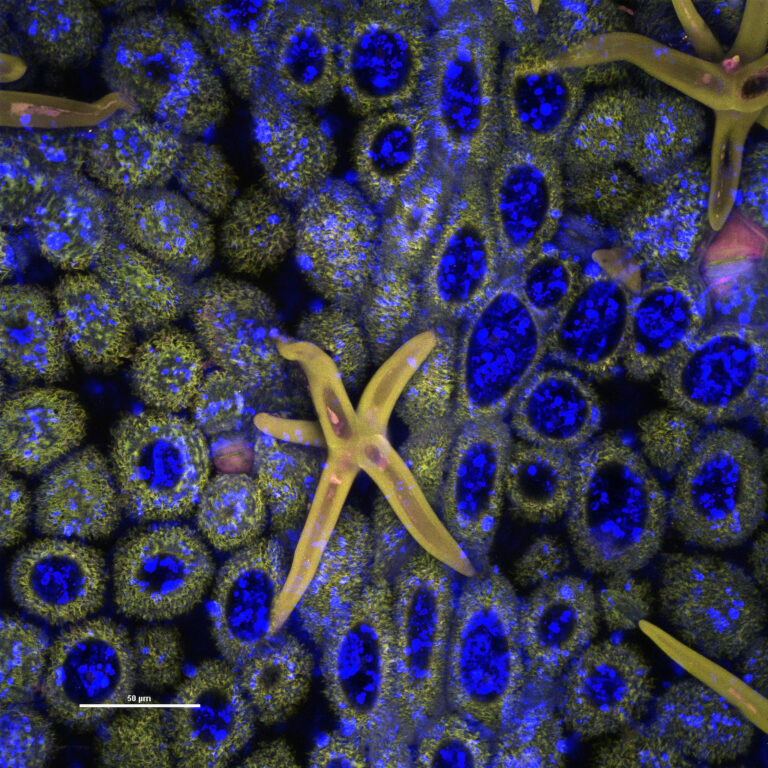
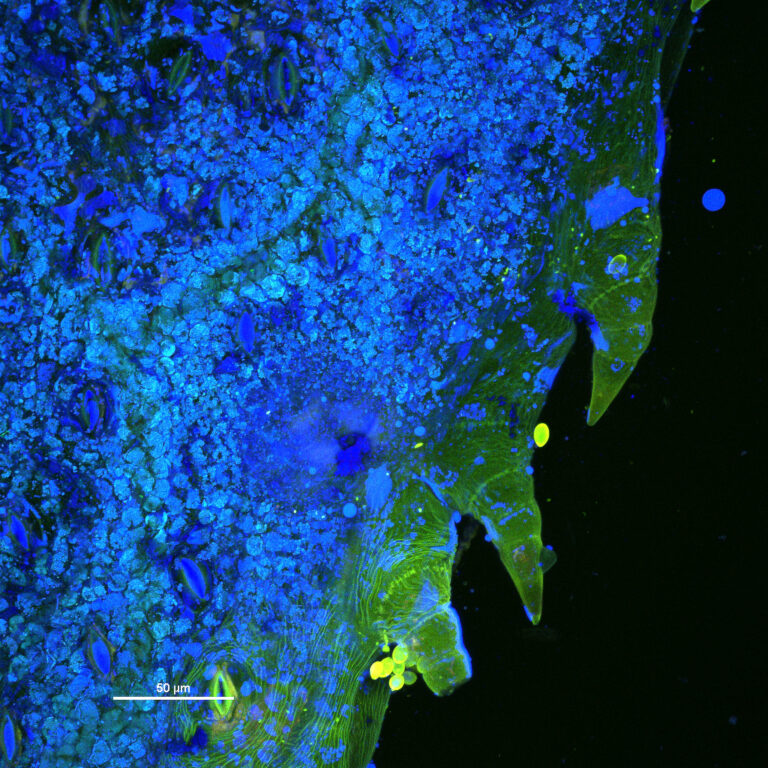
Brunfelsia grandiflora The stomata are the oval-shaped apertures in plants through which carbon dioxide necessary for photosynthesis enters. They also release oxygen. In some of the confocal images of Brunfelsia grandiflora included here, the stomata are especially evident and could serve as an opportunity to consider how breath links humans and plants. In keeping with the…

Mimosa pudica
|

Mimosa pudica

Mimosa pudica Mimosa pudica most definitely has become an important performer in pioneering research on plant-memory.   Monica Gagliano considers this species “a strange and extraordinary bridge between two kingdoms of life—the animal and the vegetal, the sensitive and the insensitive.”  After a series of rigorous scientific tests conducted in Italy in collaboration with Stefano Mancuso,…

Erythroxylum novogranatense
|

Erythroxylum novogranatense

Erythroxylum novogranatense One of my all-time favorite books is Wade Davis’s One River: Explorations and Discoveries in the Amazon Rain Forest. It is full of harrowing adventures, heroic feats in the name of science and a deep respect for traditional Amerindian botanical knowledge as studied by the legendary Richard Evans Schultes and his protégés Timothy…

Tagetes lucida
|

Tagetes lucida

Tagetes lucida The Huichol (Wixárica) call Tagetes lucida (Mexican Marigold), a plant native to the Americas, Tamutsáli and Yahutli. Its brightly-colored flowers are used in religious ceremonies on home altars as incense and decorative folk art associated with the Day of the Dead throughout Mexico and have a pre-Columbian origin. Siegel, Collings and Diaz document…

End of content

End of content